
Symptom Assessment
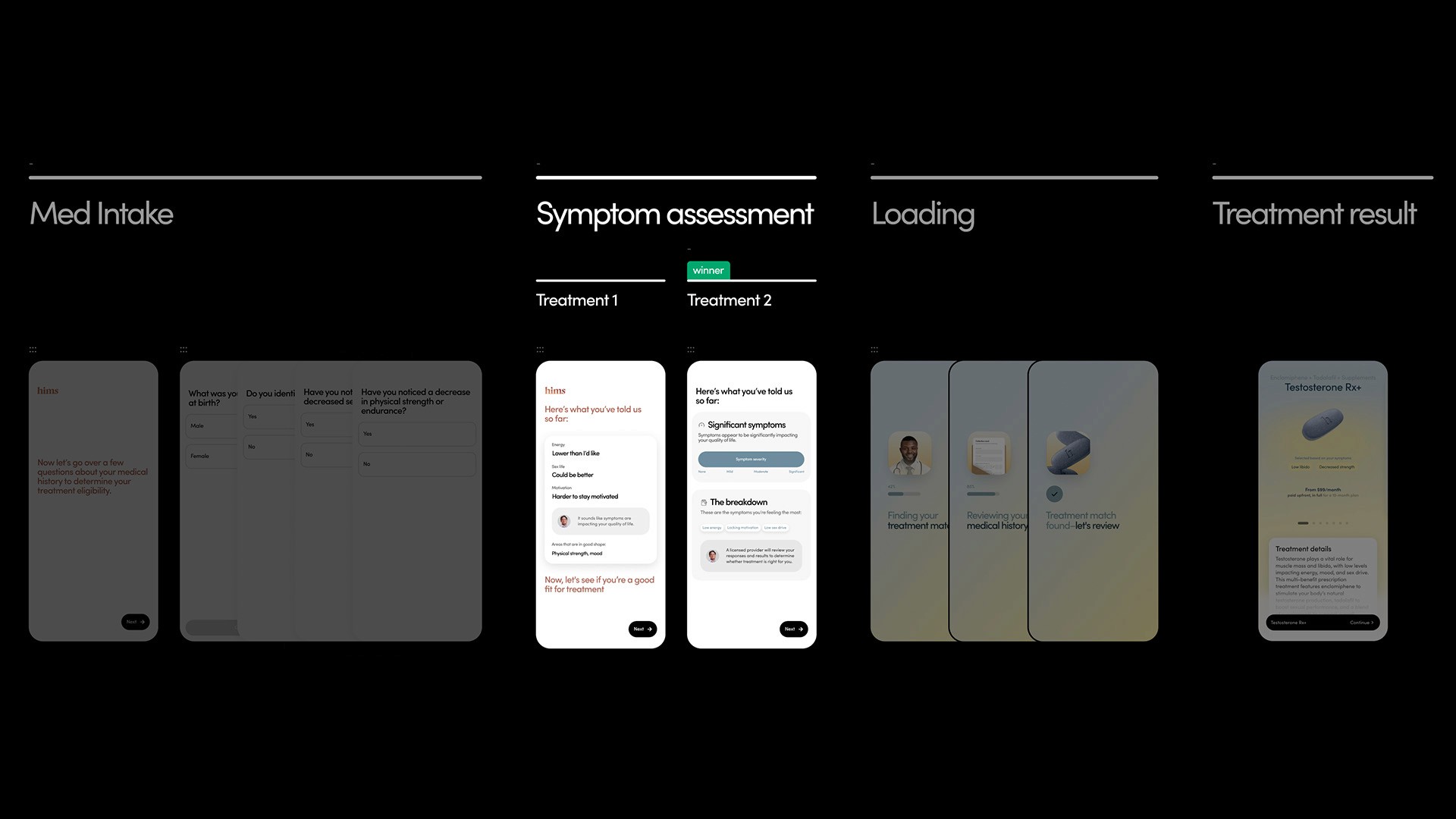
A symptom assessment screen that contextualizes a user's intake answers into a clear picture of their symptom severity, bridging the gap between medical intake and treatment result.
00

problem
Users completing the testosterone intake at Hims & Hers arrived at their treatment result without understanding what their symptoms actually meant or how severe they were, leaving the treatment recommendation feeling disconnected from their concerns and contributing to low conversion rates in the category.
Users completing the testosterone intake at Hims & Hers arrived at their treatment result without understanding what their symptoms actually meant or how severe they were, leaving the treatment recommendation feeling disconnected from their concerns and contributing to low conversion rates in the category.
solution
A single symptom assessment screen, inserted before the treatment result, that translates a user's intake answers into a contextualized view of their symptom severity.
A single symptom assessment screen, inserted before the treatment result, that translates a user's intake answers into a contextualized view of their symptom severity.
Bridging the Gap Between Symptoms and Treatment
The testosterone category had a conversion problem, and the culprit wasn't obvious. Users were completing the intake but arriving at their treatment result without understanding what their symptoms actually meant and how the recommended treatment addressed them. I owned the full design of Symptom Assessment, a single-screen solution that bridges the gap between medical intake and treatment result by showing users their symptom severity in plain terms.
Giving Symptoms Context and Meaning
A two-concept test made the answer clear: users didn't want their answers played back to them, they wanted those answers interpreted. By showing users the "why" behind their recommendation rather than simply repeating their answers back, the experience made treatment feel relevant and personally justified. Test 2, the winning design, showed severity in context, giving users the 'why' that made the treatment recommendation land.
The symptom scale was based on how users answered questions about their symptoms. This simple visual gave users validation for what they were feeling, and clarity that their symptoms were worth addressing. The symptoms users reported were surfaced as tags — a design pattern used consistently across the flow, including on the treatment result page.

Despite being a one-screen addition built within tight scope constraints, it delivered a 14% lift to conversion, one of the strongest results the team had seen across the category.
Bridging the Gap Between Symptoms and Treatment
The testosterone category had a conversion problem, and the culprit wasn't obvious. Users were completing the intake but arriving at their treatment result without understanding what their symptoms actually meant and how the recommended treatment addressed them. I owned the full design of Symptom Assessment, a single-screen solution that bridges the gap between medical intake and treatment result by showing users their symptom severity in plain terms.
Giving Symptoms Context and Meaning
A two-concept test made the answer clear: users didn't want their answers played back to them, they wanted those answers interpreted. By showing users the "why" behind their recommendation rather than simply repeating their answers back, the experience made treatment feel relevant and personally justified. Test 2, the winning design, showed severity in context, giving users the 'why' that made the treatment recommendation land.
The symptom scale was based on how users answered questions about their symptoms. This simple visual gave users validation for what they were feeling, and clarity that their symptoms were worth addressing. The symptoms users reported were surfaced as tags — a design pattern used consistently across the flow, including on the treatment result page.
Despite being a one-screen addition built within tight scope constraints, it delivered a 14% lift to conversion, one of the strongest results the team had seen across the category.
year
2026
timeframe
1 month
tools
Figma
category
UI/UX
"Gia consistently brings thoughtful, creative direction to every project. She mocks up multiple options, excels at workshopping ideas in real time, and always finds inspiration to share with the team. She elevates the work every time."
Hannah B., Hims & Hers, Senior Product Marketing Manager


